Our Story: Why AeroClenz Exists

A Career Built on Precision, Not Guesswork
Founder Matt Saberton earned his private pilot’s license while still in high school long before most people have decided what they want to do with their lives. He went on to study Aviation and Aerospace Science, then built a career that reads like a checklist of aviation’s most demanding, high-stakes roles: flight instructor, air-ambulance pilot, test pilot, international Gulfstream pilot, and eventually chief pilot and COO of a worldwide private-jet charter operation.
Each of those roles shares a common thread. In aviation, there is no margin for “close enough.” Systems are engineered, tested, certified, and re-certified because lives depend on precision, redundancy, and rigor at every stage. That standard doesn’t stay on the tarmac. It becomes how you see every problem for the rest of your career.
It’s the standard Matt carried into every cockpit he flew. And it’s the standard that would eventually define AeroClenz.
The H1N1 and COVID Inflection Points
Long before AeroClenz was a company, it was a question Matt couldn’t shake: why do we accept shared air as a fixed risk instead of an engineering problem?
That question has two origins.
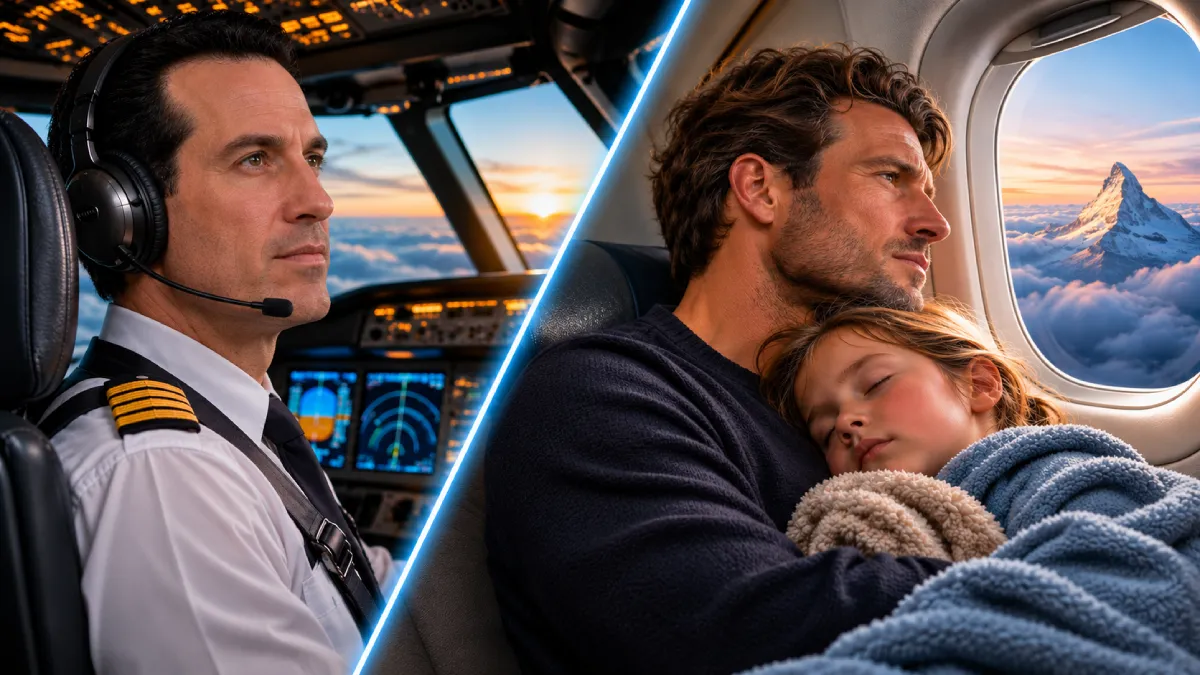
The first came during the 2009 H1N1 pandemic, when Matt contracted swine flu while transporting a sick pediatric patient. Flying a confined cabin with a critically ill child gave him a visceral, firsthand understanding of what it means to share air with someone carrying a dangerous pathogen and how little technology existed to interrupt that transmission in real time.
The second came over a decade later, in March 2020, when Matt departed Switzerland on one of the last flights authorized to return to the United States before the world shut down. Somewhere over the Atlantic, the scale of what was coming became impossible to ignore. Confined, shared-air environments aircraft cabins, waiting rooms, classrooms, offices were about to become the defining vulnerability of a generation.
Two moments, over a decade apart. One conclusion: cleaning happens periodically. Contamination happens continuously. Something had to close that gap.
The GE Prototype That Changed Everything
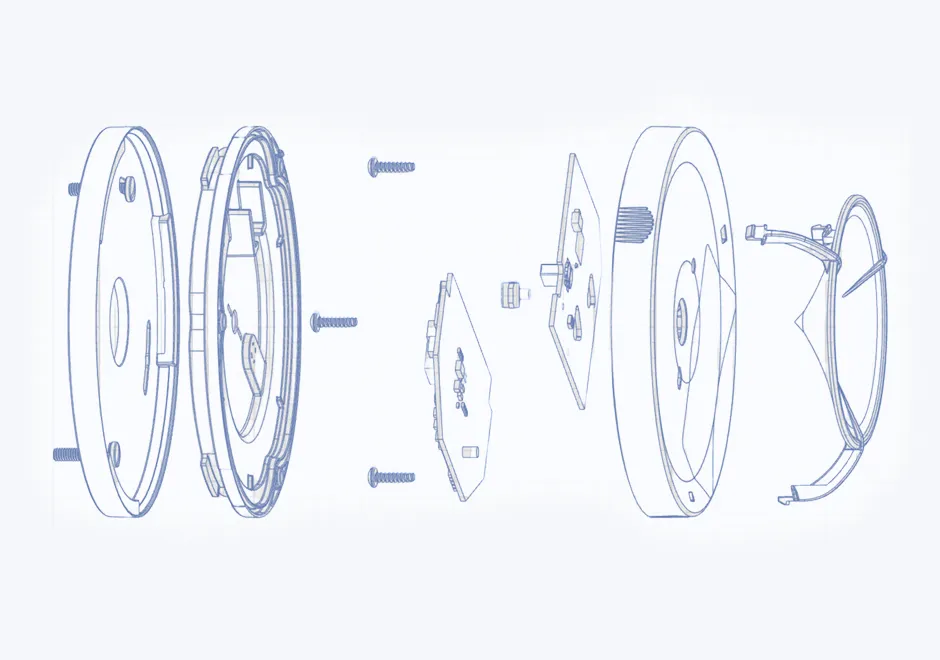
The answer arrived in an unlikely place: Nela Park, the historic home of GE Lighting, where Matt encountered an early disinfection-lighting prototype developed under GE’s 365DisInFx program. The technology was promising but it had been engineered for static, ground-based environments, not the constrained, high-stakes conditions of an aircraft cabin.
Matt saw something different. He proposed re-engineering the technology specifically for aviation adapting it to meet the durability, safety, and certification demands of a pressurized cabin at 35,000 feet. GE’s ownership group backed the idea. In the fall of 2020, AeroClenz was founded, and the company acquired GE Lighting’s disinfection-lighting IP portfolio as its technological foundation.
It was the moment an aviation career and an engineering breakthrough converged into a single mission: build disinfection technology with the same rigor as the aircraft systems people already trust with their lives.
Cleaning is an event. Recontamination is continuous.
Earning It the Aerospace Way: FAA Certification Rigor
Building a better disinfection concept was only the starting point. Proving it would meet aviation’s standard required a different kind of discipline entirely.
AeroClenz pursued the aviation industry’s most demanding validation pathways including Supplemental Type Certificate (STC) and Approved Model List (AML) certification the same processes aircraft manufacturers use to certify that a modification is safe to fly. That meant partnering with credentialed aerospace-medicine expertise, not just engineering talent.
From Aircraft Cabins to Every Shared Space
AeroClenz’s technology didn’t start in office buildings, schools, or healthcare facilities. It started in the air and it evolved deliberately, generation by generation.
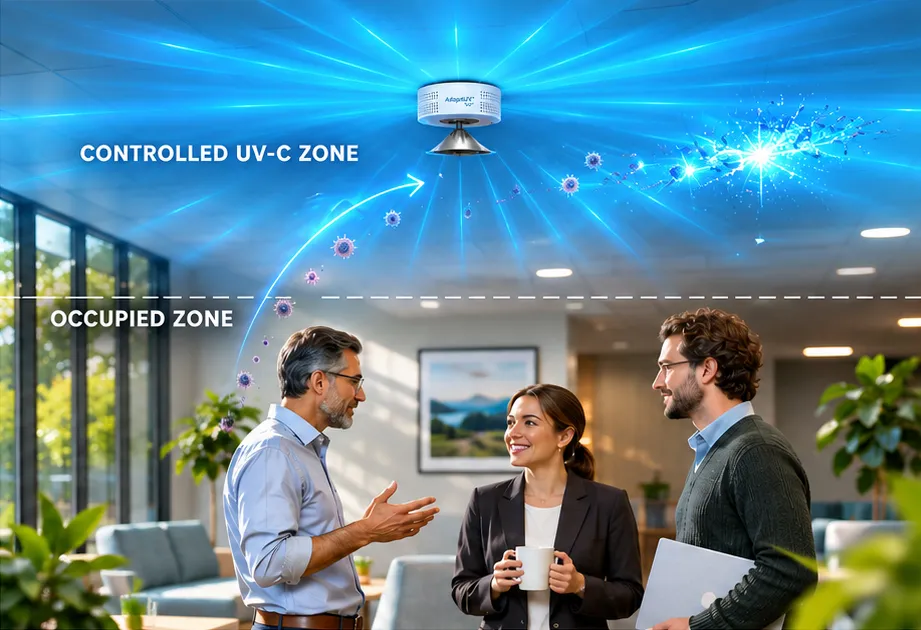
Generation 1, known as AVIVE™, was built for aviation: targeted, high-precision treatment engineered for the unique constraints of an aircraft cabin. From there, the technology progressed through upper-room and volumetric treatment approaches, expanding its reach beyond a single confined space.
That evolution led to AdaptUV™ the current platform, re-engineered from its aviation lineage to meet the needs of terrestrial environments: offices, healthcare facilities, schools, and the everyday indoor spaces where people live, work, learn, heal, and gather.
The lineage matters. AdaptUV™ isn’t a disinfection product built from a blank page. It’s the direct descendant of technology developed, tested, and certified against aviation’s uncompromising standard adapted, step by step, for the ground.
Cleaning is an event. Recontamination is continuous.
The Thesis That Still Drives Every Decision
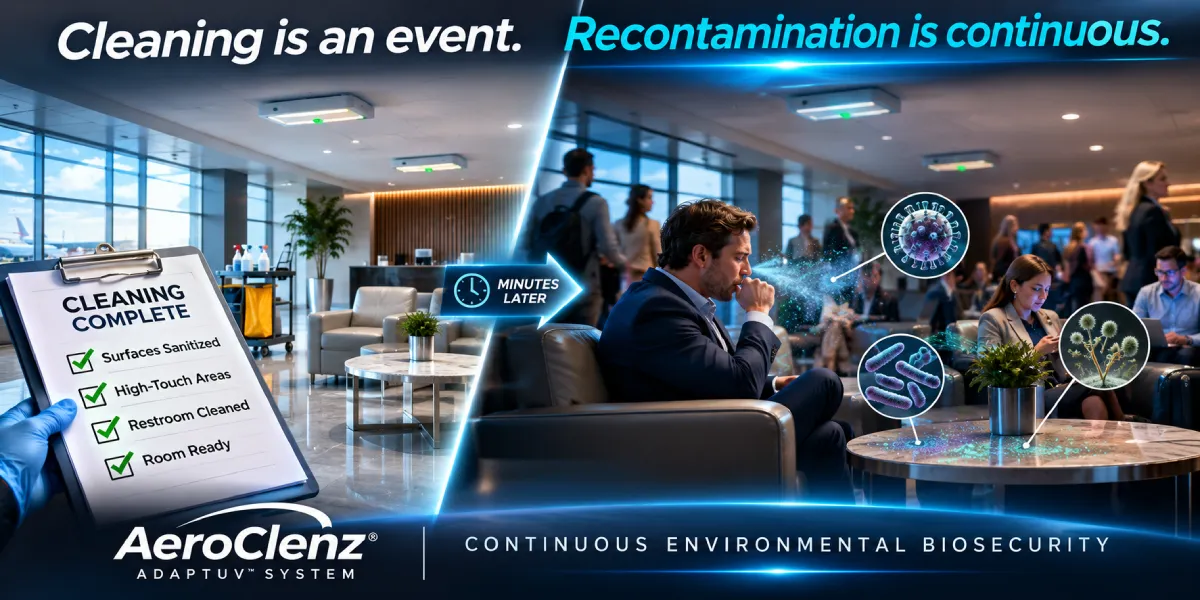
Strip away the certifications, the patents, and the engineering detail, and AeroClenz comes down to one founding thesis, forged in a sick child’s cabin and a near-empty flight out of Switzerland:
Cleaning is an event. Recontamination is continuous.
Every person who walks into a room, every breath exhaled, every surface touched reintroduces risk the moment the cleaning crew leaves. Matt Saberton didn’t learn that from a textbook. He learned it in the air, under pressure, when the stakes were personal. AeroClenz exists to close that gap not with another item on a cleaning checklist, but with the same aerospace-grade rigor that keeps aircraft safe, now engineered for the ground.
AeroClenz systems are not medical devices and are intended as an adjunct to existing housekeeping practices.